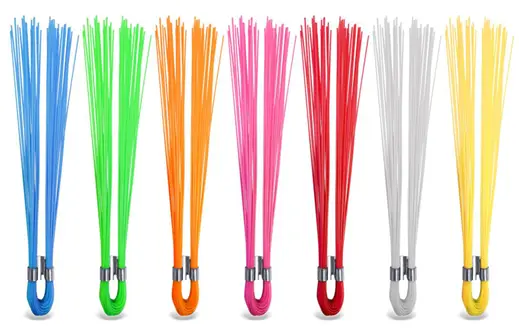

As a professional manufacturer of ground marking whiskers, we are often asked by customers: What do these fluorescent-colored markers stand for, and why are different colors used for different projects?
In fact, the colors of ground marking whiskers, field marking whiskers, and survey marking whiskers are not randomly chosen. They strictly follow the universal engineering color-coding standard established by the American Public Works Association (APWA). This is not only an industry specification but also a critical guideline to ensure construction safety, prevent pipeline accidents, and support environmental conservation.
Today, we will clearly explain the color meanings and applications of ground marking whiskers, field marking whiskers, and survey marking whiskers to help procurement teams, construction crews, and environmental inspectors use them correctly and efficiently.
Core Standard: APWA Color Code (Mandatory Industry Compliance)
All our ground marking whiskers, field marking whiskers, and survey marking whiskers fully comply with the official APWA color-coding system. Each color corresponds to specific underground utilities or on-site points.
| Color | Meaning | Application | Applicable Product |
|---|---|---|---|
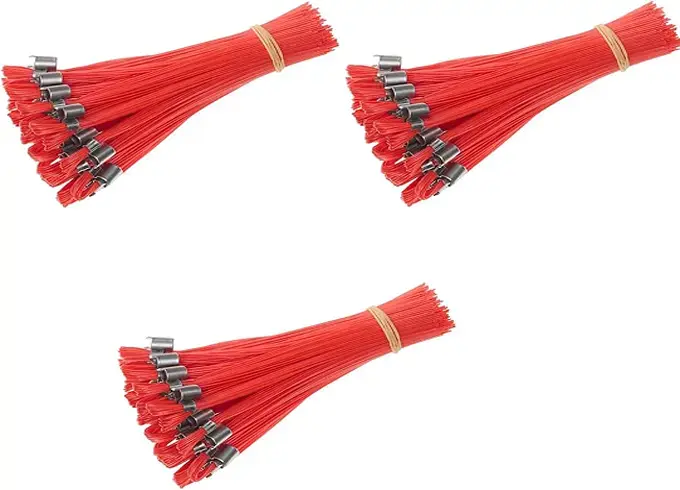
| Red | Electric power lines, cables, conduits, lighting lines | Municipal power construction, high-voltage area protection | ground marking whiskers / survey marking whiskers |
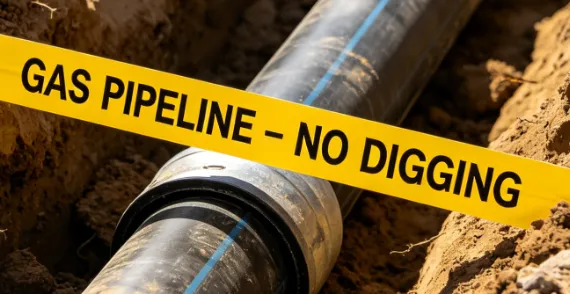
| Yellow | Gas, oil, steam, petroleum | Gas pipeline inspection, hazardous area warning | ground marking whiskers / field marking whiskers |
| Orange | Communication, alarm, signal lines, cables | Telecommunication construction, fiber protection | survey marking whiskers / ground marking whiskers |
| Blue | Potable water | Urban water supply, drinking water pipelines | ground marking whiskers |
| Green | Sewers, drain lines | Municipal drainage, sewage separation projects | field marking whiskers |
| Purple | Reclaimed water, irrigation, slurry lines | Agricultural irrigation, ecological water projects | field marking whiskers |
| White | Proposed excavation | Pre-construction planning, earthwork boundaries | survey marking whiskers |
| Pink | Temporary survey markings | Survey staking, temporary monitoring points | survey marking whiskers / field marking whiskers |
Color Selection for Different Applications
1. Municipal Engineering & Construction
In construction and excavation projects, ground marking whiskers are the most widely used:
Red ground marking whiskers mark power lines to prevent electric shocks.
Yellow stake whisker markers identify gas and oil pipelines to avoid explosions or leaks.
Orange ground marking whiskers protect communication cables to maintain city network safety.
2. Field Surveying & Land Management
Survey marking whiskers are ideal for surveying, staking, and land mapping:
White survey marking whiskers clearly mark proposed excavation zones.
Pink survey marking whiskers serve as temporary survey markers without long-term environmental impact.
3. Environmental Conservation & Ecological Monitoring
Field marking whiskers are perfect for conservation and ecological protection:
Green field marking whiskers mark wetland and habitat boundaries.
Purple field marking whiskers indicate irrigation and reclaimed water systems.
Their non-intrusive installation (on stakes or nails) minimizes damage to ecosystems.
Why Choose Our Marking Whiskers?
APWA CompliantAll ground marking whiskers, field marking whiskers, and survey marking whiskers meet official APWA standards for visibility, durability, and weather resistance, suitable for government bidding and municipal projects.
Customizable for ProjectsWe support customization of color, length (such as 200ft / 300ft), and installation style (fits 60D nails or wood stakes) for construction, surveying, and environmental applications.
Long-Lasting DurabilityMade of high-strength PE material, our markers resist weather, foot traffic, and UV exposure, with a service life of 6–12 months, reducing replacement costs.
Professional SupportWe provide full specifications, test reports, project cases, and free samples. Dedicated support is available for bulk and project procurement.
Conclusion
Choosing the correct color for ground marking whiskers, field marking whiskers, and survey marking whiskers directly affects construction safety, project compliance, and environmental protection. Using the right color means following industry standards and being responsible for safety, assets, and the environment.